Must Visit
Säynätsalo Town Hall
Alvar Aalto · 1952
ArchitectAlvar Aalto
Year1952
LocationJyväskylä, Finland
Coordinates62.1401° N, 25.7693° E
TypeArchitecture · Civic Building
StatusMust Visit
Sign in to save and check in to this place.
About this place
Alvar Aalto's 1952 civic complex on a small island near Jyväskylä — red brick courtyard composition with a raised council chamber, among the most studied works in Finnish architecture.
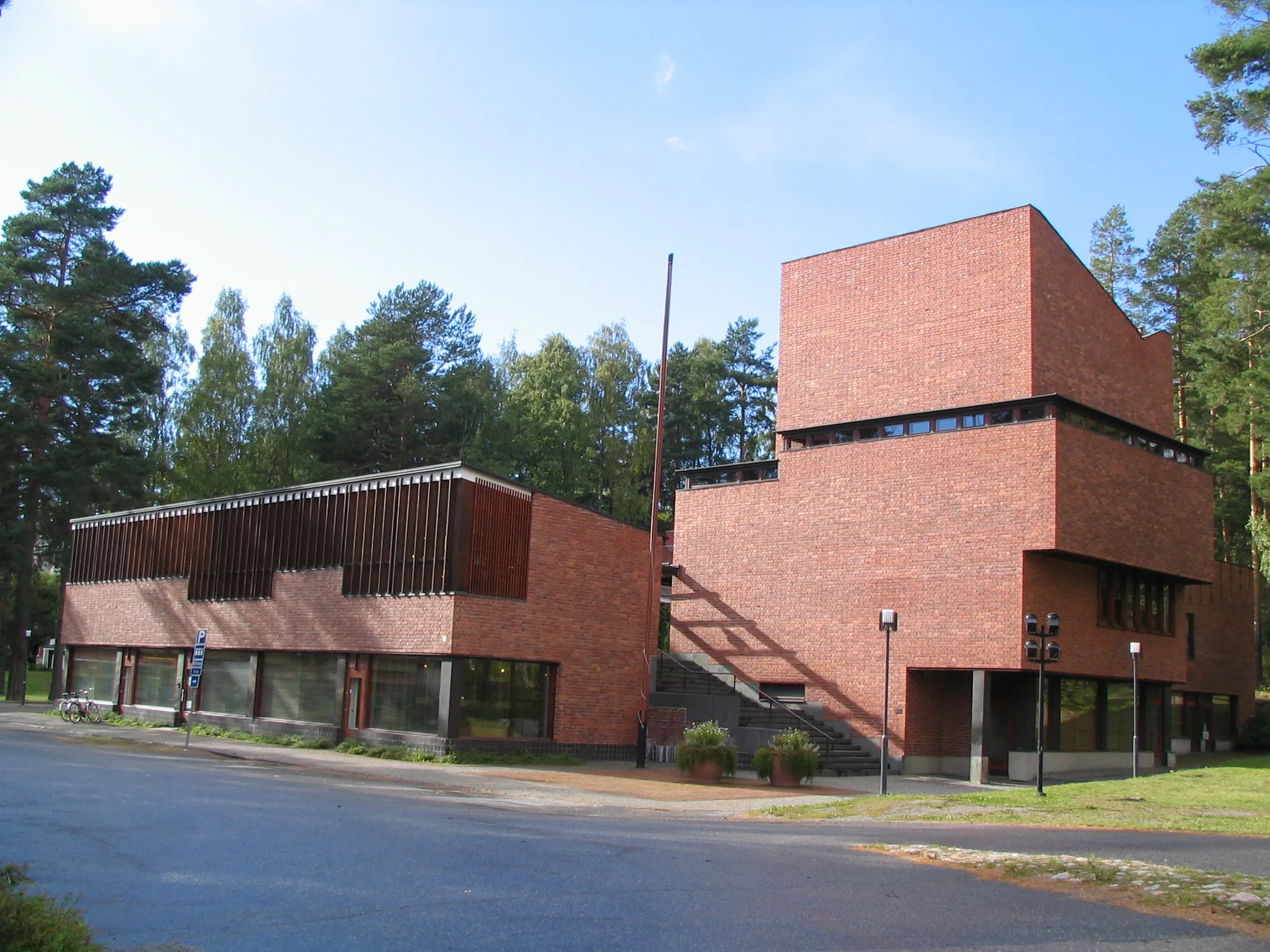
The Säynätsalo Town Hall, completed by Alvar Aalto in 1952, is a civic building of uncommon spatial intelligence: a complex of offices, library, council chamber, and housing gathered around a raised courtyard on a small island in Lake Päijänne, about 20 kilometres from Jyväskylä.
The fundamental move is topographic: the courtyard is lifted above street level so that it must be approached by climbing either an external staircase or a gentler grass-covered embankment. This threshold — between the street and the civic space above — is the building's central gesture. The courtyard is a garden in the Scandinavian medieval tradition, enclosed on three sides by the administrative block and on the fourth by a long lower building containing the library and shops.
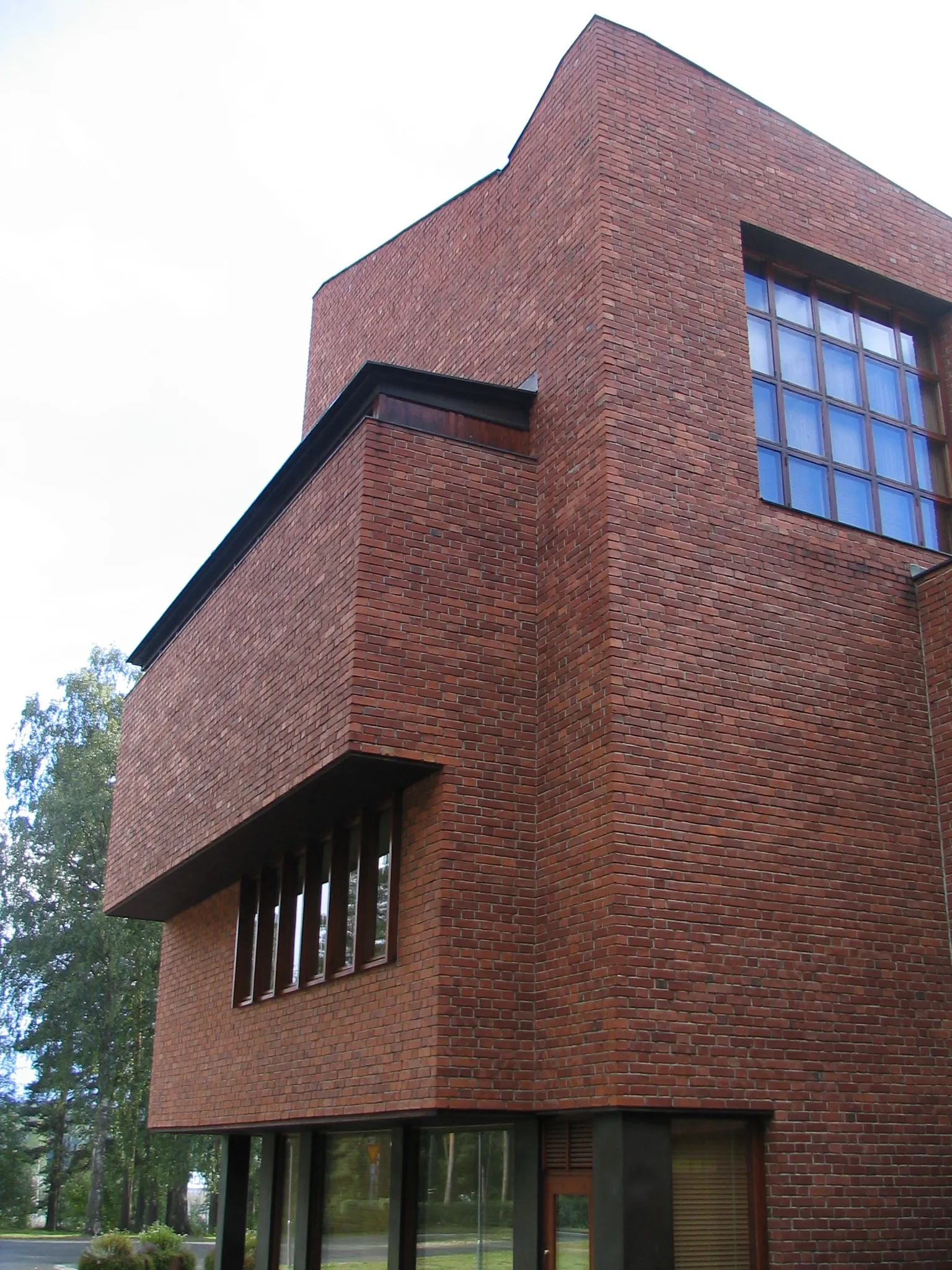
The council chamber rises above the rest of the complex as the building's tallest volume — its importance made visible from outside. Inside, the chamber is reached by a narrow, compressing staircase that opens suddenly into a high-ceilinged, timber-lined room lit from a series of high windows. The contrast between compression and release is precisely managed. The brick is handmade and load-bearing, with a warmth of surface that places the building closer to the vernacular tradition than to the white stucco rationalism of the International Style.
Säynätsalo was a small industrial municipality when the building was constructed; it is now merged into the City of Jyväskylä. The Town Hall still functions as an administrative building and is open to visitors. The adjacent island community, still intact around the building, adds to the experience of arriving here.
Architecture · Civic Building
Nearby places
More in JyväskyläAll →
Comments
Sign in to leave a comment.
Access conditions may change. Please check current opening and access information with the venue before visiting.
Something wrong or missing?