Worth Visiting
Jongmyo Shrine
Joseon Royal Court (traditional Korean architecture) · 1395
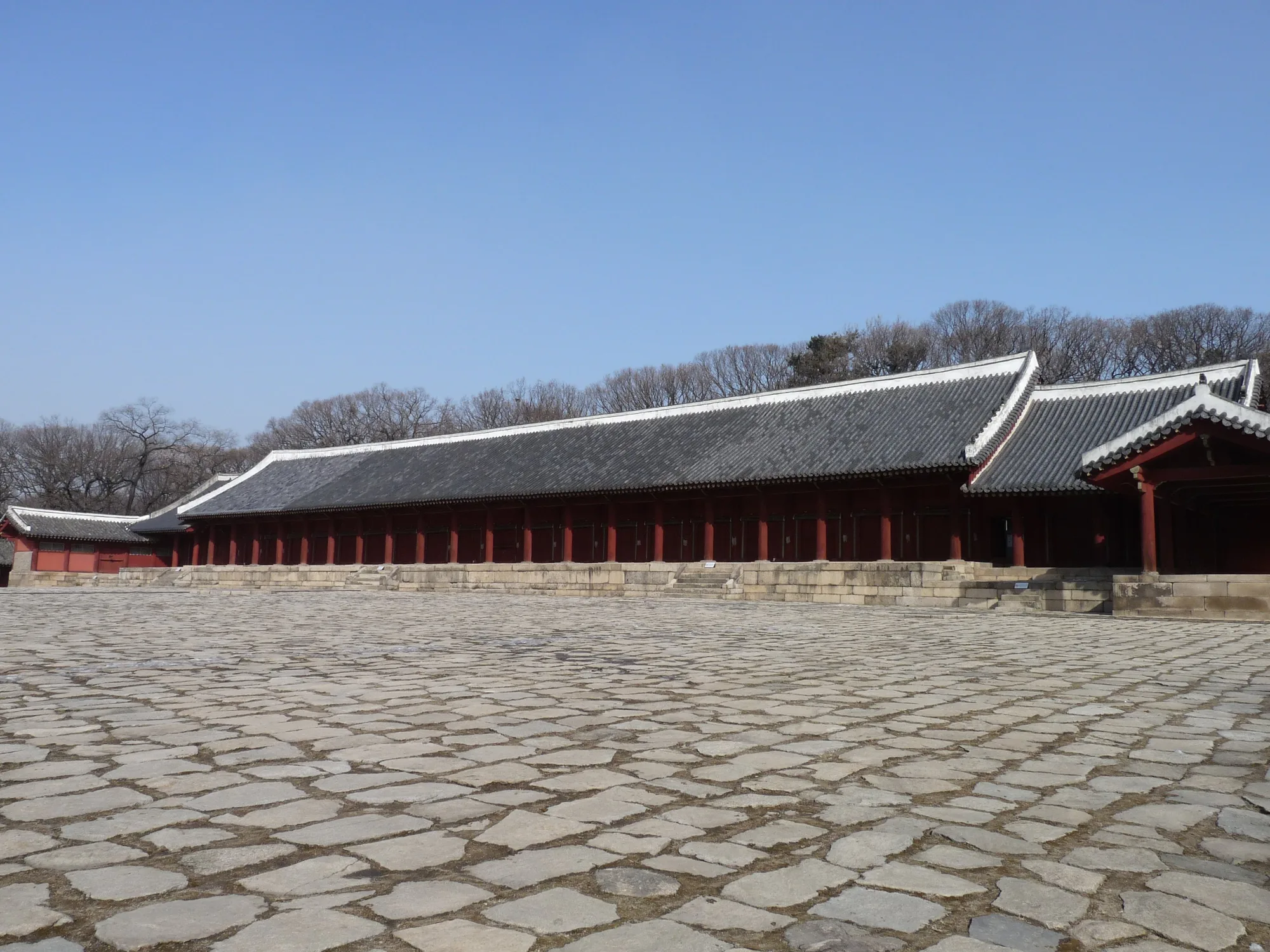
ArchitectJoseon Royal Court (traditional Korean architecture)
Year1395
LocationSeoul, South Korea
Coordinates37.5746° N, 126.9938° E
TypeArchitecture · Historic Architecture, Public Space · Memorial
StatusWorth Visiting
Sign in to save and check in to this place.
About this place
The longest wooden building on earth — a Joseon royal Confucian shrine (1395) housing spirit tablets of Korean monarchs, UNESCO-listed for its austere timber architecture and living ritual practice.
Jongmyo is the royal ancestral shrine of the Joseon dynasty and the oldest surviving Confucian royal shrine in the world. The main hall, Jeongjeon, was first built in 1395 and expanded repeatedly as the dynasty grew — the current structure is 101 metres in length, making it the longest wooden building in the world. The building is not imposing in the conventional sense; it is deliberately austere, low, and horizontal, its timber colonnades running parallel to a wide stone terrace without ornament.
The architectural character of Jongmyo is defined by restraint. Where other royal architecture in East Asia uses colour, carved decoration, and hierarchical rooflines to signal status, Jongmyo strips everything to structure: columns, bracket sets, roof, and floor. The stone platform (woldae) in front of the main hall is unpopulated during normal hours, creating a void proportional to the building that operates as an outdoor room of enormous stillness.
Inside the Jeongjeon, 49 spirit tablets of Joseon kings and queens are enshrined in individual spirit chambers, each with its own door. The building is the setting for Jongmyo Jerye — a Confucian ritual performed annually in May, with royal music and dance that continues a practice unbroken since 1464. This ritual, along with the associated music (Jongmyo Jeryeak), is inscribed separately on the UNESCO Intangible Cultural Heritage list.
The complex includes a second, quieter shrine (Yeongnyeongjeon) and large surrounding parkland. Visit on a weekday in spring or autumn, when the foliage is present without the weekend crowds.
Architecture · Historic ArchitecturePublic Space · Memorial
More in SeoulAll →
Comments
Sign in to leave a comment.
Access conditions may change. Please check current opening and access information with the venue before visiting.
Something wrong or missing?